AI-DLC · Roque Ribeiro’s lab

From signalto store

The cycle I use in my lab to build software with AI, explained for people outside the field.

Six stations, a team of AI agents working through them and a person approving every handoff. Nothing ships without proof. Here is the whole cycle, the open method for anyone who wants to use it, what came out of it and where every idea came from.

010203040506SenseDecideBuildShipMeasureEvolvethe cyclelap 01
São Paulo, Brazil · local timemeasured on Nov 6, 2026
scroll
the method in 5 minutes

The whole cycle, in one video

Before the levels, the full loop in just over five minutes: how an idea becomes a tech product, whether an app, a site, an agent or a system, under the same rule from start to finish. AI does, a person decides, the machine checks. At the end, what has already come out of the lab and where to get the open method.

Narrated in English, with captions on screen. There is a Portuguese version on the Portuguese page.

Script, animation and editing made with Claude, synthetic voice from ElevenLabs and music generated with Suno. Approved by me before going live.

Watch on YouTube

The video opens through YouTube, without tracking cookies, only when you click.

level 01

The bottleneck moved

Writing code got cheap: AI already writes a good part of it. But writing code was always the smallest part of the job. What is still expensive is knowing what to build, checking that it works, putting it live and listening to the people who use it. A method that only speeds up the code leaves everything else the same size.

One working week on a change
before
discoverspecifycodechecklisten
with AI writing
discoverspecifycodechecklisten

The code block shrank. The others are the same size, and almost nobody measures the last one.

Giving an industrial mixer to a bakery does not help if nobody knows which cake the customer wants, or tastes the batter before delivering it.

AI amplifies what is already there, good and bad. And the feeling misleads: in 2026 the same study saw signs of a gain, still on weak evidence. Only what was measured counts. DORA 2025 (opens in a new tab)METR 2026 (opens in a new tab)

level 02

The idea in one sentence

  1. AI does.

    An AI agent, a program that works on its own, acts at every step: it researches, writes, tests, prepares.

  2. A person decides.

    Between one step and the next, someone approves. The agent proposes; the one who presses the button is a human.

  3. The machine checks.

    Before saying "done", an automatic lock checks the proof. Missing proof, no pass.

Keep these signs in mind. They show up in every drawing from here on.

  • AI agent
  • person approving
  • document handed forward
  • lock that checks
level 03

The cycle

Six stations around a ring. The end of one lap is the start of the next. To keep it concrete, we follow a real app around the whole lap: Placarito, a scoreboard for truco, volleyball and other games.

There are two wheels, one inside the other. The big one is this ring, the product cycle, turning at the pace of the people who use it: days and weeks. The small one turns inside the Build station, one lap per bolt, at the pace of AI: hours.

01 · station

Sense

Listen before building.

The agent
Reads reviews of similar apps, store rankings and what people ask for in communities. Turns it all into a short list of opportunities, each with its source.
The person
Picks which opportunity becomes a project. Without that choice, nothing moves.
What comes out
sinais.md a list of hypotheses, with numbers and links

It is likeThe restaurant that reads the competitor’s complaints before writing its menu.

02 · station

Decide

The blueprint before the build.

The agent
Writes two documents. The intent: the problem, the signal, what stays out. The spec: what must be true at the end, written so it can be checked. Draws three different solutions and compares them.
The person
Reads both documents and approves. It is the signature before the build.
What comes out
intent.md · spec.md intent and spec, kept with history

It is likeThe architect’s blueprint, approved before the first wall goes up.

03 · station

Build

Short stages, with an inspector at each one.

The agent
Builds in bolts, the name AWS gave to short construction steps: a few hours each, each one citing the spec. Writes the test alongside, calls a specialist reviewer and screenshots the app on several screen sizes, in light and dark.
The person
Sees the screenshots and the test results. Is never the one who finds the defect.
What comes out
commit → spec tested code, with the proof attached

It is likeA building going up floor by floor, with the inspector signing off each slab before the next.

04 · station

Ship

The conveyor to the shop window, and a hand on the button.

The agent
Builds the store page in three languages from a single file, renders the images, publishes the privacy policy and leaves everything ready up to the submit button.
The person
Presses the button. The agent never does.
What comes out
store.config.json the app sent to store review

It is likeThe shop packs and checks the order. The owner is the one who opens the door.

05 · station

Run and measure

The thermometer stays on after delivery.

The agent
Tracks reviews, rating, search position, crashes, and whether the store version fell behind. A number without a date does not go in; what was not measured shows as "not measured", never as zero.
The person
Looks at the dashboard every week and decides what deserves attention.
What comes out
cycle dashboard a dashboard with dates

It is likeThe doctor who follows the patient after discharge.

06 · station

Evolve

The end becomes the start.

The agent
Turns what people said into a new intent. A defect that can be reproduced becomes a fix the same week; the rest becomes a hypothesis for the person to pick.
The person
Picks what goes into the next lap.
What comes out
the next intent.md the intent for the next lap

It is likeThe recipe book that changes with what customers asked for this week.

level 04

A team of agents

A single agent does a lot, and makes mistakes nobody sees. In the lab the work goes through a team: each agent has a role, none of them checks its own work, and the handoff from one to the next is in writing. A person approves every phase.

  1. Main session
  2. Scanner
  3. Specialist reviewers
  4. gate
  5. evidence
  6. approval
How the work changes handsintentspecboltgateevidenceapprovalEach agent reads what the previous one left in writing, not the conversation. That is why the agent, the model or the vendor can be swapped mid-way without losing the thread.

Who does what

  • Main session

    orchestrator

    Reads the goal, splits the work, hands each part to whoever knows how to do it and puts the result together.

  • Scanner

    scanner

    Surveys what exists, cheap and fast, with no opinion: files, versions, what changed.

  • Specialist reviewers

    one per technology

    Nine of them, each looking only at what changed in its own: Swift, Kotlin, Vue, Nuxt, Nest, Electron, Capacitor, browser extension and container catalogue.

  • Dependency reviewer

    supply chain

    Checks every new package: it exists, has an owner, has some age and is not an impostor’s name.

  • Store auditor

    release

    Compares the code version with the one published in each store and says what fell behind. Never presses submit.

  • Advisor

    the most expensive model

    Called only for the decision with no way back: architecture, an irreversible action, a lock that failed twice.

  • 13agents, each with its own role
  • 7production lines with several agents
  • 120acceptance criteria across 14 technologies
level 05

The operation

A team of agents needs someone to conduct it and a machine to run on. In the lab, one agent conducts the others from a machine set aside for that, and the volume work runs at home, on open models installed on the machine itself.

Who conducts

  • Claude
  • Codex
  • Gemini

AI sessions

Grok Boton a MacBook set aside for running the lab
  • Serversinfrastructure · security · observability
  • Mac minithe volume work
  • Mewhat cannot be undone

It follows the Claude, Codex and Gemini sessions and splits the work among them, each with its own task. It also looks after the infrastructure, the security and the observability of the lab servers.

Whatever cannot be undone waits for my OK: publishing, deleting, shipping to production, paying. It does the rest on its own.

It is the same autonomy ladder as every other agent, on level 06. ↓

Where the volume runs

Mac mini

Sweeping many repositories for a verdict and reading a lot of text at once are volume work: in the cloud, every pass pays for tokens. In the lab they go to a Mac mini at home, with open models running on the machine itself.

From request to answer

  1. 01The modelonly answers inside the machine
  2. 02The gatekeepera key and a limit for each person
  3. 03The tunnelonly the API gets through, not the admin
  • 260Ktokens in a single request, and it found all 5 codes hidden inside
  • 8people at the same time for 15 minutes, with no errors
  • 3 minbetween the watchdog’s checks, and it fixes whatever falls on its own

“Volume goes home. What decides stays on the big model: refuting a finding, judging a design and writing the code that ships.”

Mac mini M5 Pro, 64 GB · 5 open models · checked on Nov 6, 2026

level 06

Where the person decides

Not every agent can do everything. Autonomy goes up one step at a time, and moving up a step is a decision written in a file, not made in the heat of a conversation.

  1. 01

    Observe

    Reads only. Changes nothing.

  2. 02

    Advise

    Recommends. The person acts.

  3. 03

    Act with approval

    Proposes, the person approves, the agent acts.

    today
  4. 04

    Act with a breaker

    Acts alone, and the person can switch it off at any moment.

    by goal

Everything that goes to the store or to production stays on the third step, including for the agent that conducts the operation. In the lab, the fourth opens by goal: a task with its objective and finish criteria written down, with the breaker at hand.

The agent never pressesSubmit

It is like a car: the one that only warns you left the lane, the one that corrects the steering, the one that drives while you watch. Nobody hands over the whole wheel on day one.

Gartner recommends exactly this, agent governance in four levels, and predicts that 40% of enterprises will demote or switch off agents by 2027 for lack of it. Gartner 2026 (opens in a new tab)SAE J3016 (opens in a new tab)

level 07

Done only with proof

When the agent says "done", an automatic lock checks that technology’s list. Missing proof, the door stays shut.

The list for an iPhone app

  1. The project generates from scratch
  2. It compiles
  3. The tests pass
  4. The specialist reviewer approved
  5. A screenshot per screen size, light and dark

done

It is the pilot’s checklist before take-off, and the cord in a Toyota factory that anyone can pull to stop the line. Here, the machine itself pulls it. Gawande 2009 (opens in a new tab)Toyota (opens in a new tab)

The mistake that became a lock

In one release, the package was missing three files that did not live alongside the code. The fix did not stop at that app: shipping now checks the package contents and refuses to submit without them.

For the curious

A lock that always blocks ends up switched off in the first week. So this one gives up after three refusals in a row and turns into a warning. And each decision it makes is recorded in a file that outlives the conversation, with the version of the rules that authorised the delivery.

level 08

Security on every lap

When AI writes more code, faster, there is more room for a flaw to slip through. So security is not a last step before shipping: it shows up at all six stations. And the testing is done by a tool of my own, open source: RoqueShield.

The question behind everything

Does zero findings mean it is clean, or that the test never ran?

A broken scanner and a clean system show the same screen: zero findings. RoqueShield was built to tell them apart. A scanner that could not verify goes into the report as skipped, and coverage shows as incomplete. It never becomes a silent zero.

It is the smoke detector with no battery: exactly as quiet as the one that works.

Where it shows up in the cycle

  1. 01

    Sense

    An opportunity that would force me to keep someone’s data on my server fails before it becomes a project.

  2. 02

    Decide

    The specification decides what will not exist: no account, no server, data only on the device. What does not exist cannot leak.

  3. 03

    Build

    Every change goes through the RoqueShield scan before "done". A third-party piece with a known flaw and a published fix does not pass, and every new package is checked: it exists, it has an owner, it is not an impostor name.

  4. 04

    Ship

    Passwords and keys never ship inside the app. Store credentials come in through a vault, without showing on screen or in the conversation history.

  5. 05

    Measure

    For what is already live, RoqueShield has the outside tests, the way an attacker would see it: the running application, the network, and what the domain exposes on the internet.

  6. 06

    Evolve

    Every flaw becomes a fix bundle the agent reads: file, line and how to fix it. The fix only counts when the next scan no longer finds the flaw, with every scanner running.

RoqueShield

Continuous security testing that refuses to stay silent.

See it on GitHub

What it does, in five steps

  1. 01

    Scan

    Runs the right tool for each kind of target: code, dependencies, live application, network.

  2. 02

    Merge

    The same problem found by two tools becomes one, with the higher severity.

  3. 03

    Triage

    An AI reorders severity, flags the likely false alarm and suggests the fix, reading evidence already stripped of personal data.

  4. 04

    Confirm

    On demand, an agent tries to prove one finding for real, inside a controlled attack environment.

  5. 05

    Deliver

    A fix bundle that another agent reads and turns into a correction. Then it scans again.

The kinds of test

  • SAST

    The code at rest

    Semgrep

  • secrets

    A password left in the code

    Gitleaks · Trufflehog

  • dependencies and images

    A third-party piece with a known flaw

    Trivy

  • infrastructure as code

    Cloud configuration

    Checkov

  • DAST

    The running application

    OWASP ZAP · Nuclei

  • network

    The network

    Nmap · Greenbone

  • exposure

    What shows on the internet

    Shodan · subdomains · look-alike domains · GitHub leaks

The AI that attacks is on a leash made of code

The agent that confirms a finding runs real attack tools, so its limit is not a sentence in a prompt. It is code checked before every command: an allowlist for each phase, a validated target, no shell, a hard timeout, and lab mode on by default. Every decision, every refusal included, goes to the audit trail.

Data does not leave without permission

Personal and card data is scrubbed from the evidence before any AI reads it. With a local model and the cloud switched off, if the local model fails the test fails, instead of sending the finding out.

Open source, Apache 2.0 license: anyone can read it, run it and check how it works.

15 scanners behind a single contract · 352 automated tests · scanning in the acceptance list of 12 of the family’s 14 technologies · measured on Nov 6, 2026

The risk is not theoretical. In a study of 576 thousand AI-generated code samples, open models cited on average 21.7% packages that do not exist, and commercial ones at least 5.2%. Whoever registers one of those names first gets into the project of whoever trusted it. USENIX 2025 (opens in a new tab)

level 09

Cost is a requirement too

Cost does not show up on the bill by accident: it is decided on the blueprint. So the architecture is chosen at the Decide station, with the cost of running it on the table, and every station watches what it spends, the AI itself included.

The cheapest server is the one that does not exist.

The new apps are born with no account, no server, and processing on the device, AI included. There is no cloud bill that grows with the number of users, and personal data stays out of my reach by design: cost and security come out of the same decision.

It is what the FinOps Foundation asks for: everyone owns what they use, and business value drives technology decisions. And it is AWS’s definition of an optimized workload: the outcome at the lowest price that still meets the requirements. FinOps (opens in a new tab)AWS 2024 (opens in a new tab)

Each task at its price

Where it shows up in the cycle

  1. 01

    Sense

    An opportunity that only works with a server, sync across devices or AI that runs only in the cloud fails before it becomes a project.

  2. 02

    Decide

    The architecture is chosen here: three designs compete, and the expensive advisor is called for the decision, checking on the map what else changes.

  3. 03

    Build

    Each task uses the model its size calls for, and whatever a plain program can check spends no AI at all.

  4. 04

    Ship

    The checklist runs on the machine, before the push, instead of on a paid cloud pipeline. And this site is static: there is no server to pay for or to go down.

  5. 05

    Measure

    Cost is measured like any other metric. How much context the kit loads into every session is measured before each of its versions ships.

  6. 06

    Evolve

    What costs more than it returns gets switched off with the number in hand. That is what happened to the paid pipeline and to the many-agent processes.

How I choose the architecture

  1. 01

    Three designs before one.

    When there is more than one path, three independent designs compete, and the winner takes the best pieces of the others. The first idea anchors the ones that follow; the panel breaks the anchor.

  2. 02

    The expensive model only at the expensive moment.

    Three roles, three prices: a cheap model scans, a medium one builds all day, and the most expensive one is only called for architecture, irreversible actions, or a lock that failed twice. Heavy volume goes to the local models at home (level 05).

  3. 03

    Program before AI.

    The 12 automatic locks and the checklists run as plain programs: zero AI cost and an answer in milliseconds.

  4. 04

    Measure before cutting.

    The paid integration pipeline was switched off after being measured: it always failed, for the wrong reason. The 7 many-agent processes stay paused, because one run costs more than a whole day of work.

level 10

The toolbox

None of this lives in anyone’s head. It lives in a plugin, a package that any AI session loads when it opens, and that carries a rule learned in one app to all the others.

roqueos-kit
  • A–Z

    The house manual

    context

    What has already been decided and is not reopened, and the vocabulary of each product.

  • 7

    The recipes

    skills

    The step by step of what repeats: testing in the simulator, building the store page, measuring the impact of a change.

  • 13

    The specialists

    reviewer agents

    One per technology, looking only at what changed.

  • 12

    The automatic locks

    hooks

    They fire on their own: a leaking secret, shipping outside the path, finishing without proof, text that sounds like AI.

  • 120

    The checklist

    gates · across 14 technologies

    Each technology’s acceptance criteria, written for the machine to run.

  • 7

    The production lines

    workflows

    Whole processes with many agents. Off by default because of cost, and only run when someone allows it.

  • 17

    The gauges

    tools

    Store signals, dependency map, secrets vault, cycle dashboard.

  • 68

    The house map

    68 pieces joined by 86 dependencies. Before touching one of them, the map says what else has to change, and in which order.

ClaudeCodex

Different tools, one method

The same method runs with Claude, through the plugin in Claude Code and Cowork, and its open version, aidlc-harness, generates the commands for 15 AI tools from a single file, from Claude Code to Copilot, Cursor, Codex and Gemini CLI. In the operation, one agent splits the work between Claude, Codex and Gemini (level 05). It does not depend on a vendor.

counted from disk on Nov 6, 2026 · kit 2.27.1 · since Jul 18, 2026

level 11

The method is open

What this lab learned became an open-source kit, aidlc-harness, for anyone who wants to run the same cycle in their own project. It is a practical interpretation of AI-DLC, under the MIT license.

The kit’s four decisions

  1. Acceptance criteria are data.

    Written for the machine to run, not a loose sentence in a prompt.

  2. A program beats the model at mechanical work.

    Counting, comparing and checking is work for an ordinary program, at zero AI cost.

  3. No evidence, no done.

    The raw test output goes into the conversation before any "finished".

  4. A person approves.

    Each phase waits for a signature in the file itself, and an approval signed by an AI does not count.

“A rule without a mechanism is decoration.”

The scan contract

aidlc-scan0clean1failed2did not run

A scan that did not run is not clean. It is RoqueShield’s question, now for any project and any security tool.

One file, 15 tools

  • Claude Code
  • OpenCode
  • Kilo Code
  • GitHub Copilot
  • Cursor
  • Gemini CLI
  • Google Antigravity
  • Kiro
  • OpenAI Codex
  • Devin Desktop
  • Cline
  • JetBrains Junie
  • Continue
  • Augment
  • Zed

A single AGENTS.md generates each tool’s commands, in its own format and with its own question window, and CI fails when one drifts.

It has a profile for regulated companies and a scanner that looks in the repository for what identifies a person or a company: IPs, emails, machine paths, secrets.

The Inception recommends first

The AI reads everything, writes the whole draft with its recommendations and asks at most five things, only what the team has to decide. Accepting every recommendation is one click.

level 12

What came out of the cycle

The app factory started running the whole cycle on Sep 10, 2026. What follows comes straight from the App Store and from the code history.

  • 7
    apps started
  • 7
    already on the App Store
  • 31
    calendar days
  • 2–8
    days from start to store

All 7 also have a native Android version, in Kotlin and Compose, made by the same factory.

From the start of the work to the App Store
  1. Placarito
    5 days
  2. Qrie
    8 days
  3. Arrumio
    2 days
  4. Garfada
    7 days
  5. Zelipata
    6 days
  6. Brindilo
    5 days
  7. Vislivo
    4 days
  • Placarito

    v1.0.0

    A scoreboard for truco, volleyball and other games, with no ads mid-match.

    where it came from

    "The ads won’t close. Impossible to use the app." (one-star review of a truco scorekeeper with 10 thousand reviews)

    started
    Sep 10, 2026
    on the store
    Sep 15, 2026
     
    5 days
    Open on the App Store
  • Qrie

    v1.0.0

    Stylish QR codes, Pix included, made on the iPhone itself.

    where it came from

    "An absurd amount of ads or $$ for something so simple." (review of the QR generator leading the App Store search)

    started
    Sep 10, 2026
    on the store
    Sep 18, 2026
     
    8 days
    Open on the App Store
  • Arrumio

    v1.2.0

    A packing checklist that runs entirely on the device, with a local assistant.

    where it came from

    My pick, to test the whole cycle on a simple app. Then nine laps driven by my own use.

    started
    Sep 16, 2026
    on the store
    Sep 18, 2026
     
    2 days
    Open on the App Store
  • Garfada

    v1.0.0

    A food diary that runs entirely on the iPhone, with the Brazilian food composition table.

    where it came from

    Ads and subscriptions are the two biggest complaints across 50 thousand diet app reviews, and the best-known Brazilian app has been stalled since 2024.

    started
    Sep 16, 2026
    on the store
    Sep 23, 2026
     
    7 days
    Open on the App Store
  • Zelipata

    v1.2.0

    A guide and routine for leaving your pet with someone, readable by the sitter without installing anything.

    where it came from

    Whoever travels needs to hand over the pet’s routine, medicine and contacts in a clear guide, without sign-ups.

    started
    Sep 17, 2026
    on the store
    Sep 23, 2026
     
    6 days
    Open on the App Store
  • Brindilo

    v1.1.1

    A planner for small gatherings: the host’s tasks, shopping and schedule.

    where it came from

    Invitation apps look after the guests. Nobody was looking after the host.

    started
    Sep 18, 2026
    on the store
    Sep 23, 2026
     
    5 days
    Open on the App Store
  • Vislivo

    v1.0.0

    A service report with before and after photos, a checklist and a PDF ready on the spot, made on the iPhone itself.

    where it came from

    People who work alone, cleaning upholstery for example, need to show the finished job with photos and a report while still on the visit.

    started
    Oct 6, 2026
    on the store
    Oct 10, 2026
     
    4 days
    Open on the App Store

The rest of the house

The apps above came out of the factory. The rest of the house runs on the same kit, with the same locks.

  • RoqueOS

    v1.6.0

    The lab: an entire operating system in the browser.

    Windows, a dock, Launchpad, a Docker container store and AI agents, all in one tab. The same URL runs on the web, iPhone, Android, Windows and TV, and the app is approved on all three stores. It is where the other products are born.

    on the store
    Feb 27, 2026
     
    App Store
    • Web
    • iOS
    • Android
    • Windows
    • TV
    • Docker
  • Cadentia

    v1.16.2

    The musician's toolkit, running entirely on the device.

    Tuner, metronome, real-time separation of a song’s instruments, a simple recording studio and a virtual guitar through the camera. It started as my own study tool and now has a community asking for features.

    on the store
    Aug 6, 2026
     
    App Store
    • iOS
    • Android
    • macOS
    • Windows
    • Linux
  • myABBA

    v1.2.1

    The native apps for Nelson Borges' devotional project.

    myABBA is Nelson Borges’s non-profit devotional platform. The website and the content are his; the iPhone and Android apps came out of the same kit as my other products.

    on the store
    Aug 7, 2026
     
    App Store
    • iOS
    • Android
  • Letreo

    v1.1.0

    Stage light on your iPhone.

    A dot-matrix LED sign at 120 Hz, a mode that pulses with the music and strobe on the flashlight. It works offline, in ten languages.

    on the store
    Aug 7, 2026
     
    App Store
    • iOS
  • MDViewer

    The app for opening Markdown on Windows.

    A reader, an editor and both side by side, with synced scrolling. Free, no account and no ads, on the Microsoft Store. It is the app in the lap told just below.

    on the store
    Mar 11, 2025
     
    Microsoft Store
    • Windows
  • RoqueShield

    Continuous AI security, open source.

    It scans code, dependencies, the running application and the network, uses AI to triage the findings and hands over a fix package that agents such as Claude Code, Cursor and Copilot can read. It looks after security in the cycle, as level 08 shows.

    started
    May 11, 2026
    • Open source
    • Docker
A whole lap, on a real store

From review to reply, in three days

MDViewer, my Markdown app for Windows, is the most complete example of a closed lap: a review on the Microsoft Store became a fix, the fix reached the store, and the reply went back to the person who wrote it, in the same place.

  • 3days from the review to the fix on the store
  • 25/25reviews answered in Partner Center
  • 1.6 → 4.3Store rating, from the old version to the last 30 days
"Chief gripe is it does not remember screen position and always opens off-screen with only an edge visible… If this was fixed I’d pay for it."
Microsoft Store · a user in the United Kingdom · Sep 10, 2026
Developer reply · Sep 13, 2026

Written and sent by the agent after the fix went live. It names the defect and states the real cause, which was not the large monitor.

  1. 01

    Measure

    The agent reads the reviews of the new versions in Partner Center, Microsoft’s area for publishers. There are six: four with five stars and two with three, each pointing to a concrete defect.

  2. 02

    Evolve

    The two three-star reviews become the next round. First, the cause: the user blamed his large monitor, but the app saved the window position and never checked whether it still fit on any monitor.

  3. 03

    Build

    The app now checks that at least 120 pixels of the title bar remain inside some monitor. The test deliberately saves a position outside all of them and confirms the window comes back to the centre. The same round brings what the other review asked for, a right-click menu in the editor and scrolling synced both ways, and the search panel now speaks the app’s three languages.

  4. 04

    Ship

    Version 2026.9.1300.0 passes Microsoft’s certification and reaches the store on September 13, three days after the review. It is checked against the Store’s own catalogue, not the dashboard.

  5. 05

    Operate

    The agent replies to the reviews directly in Partner Center. The rule was agreed before writing: no "working perfectly"; each reply names the defect the person hit and cites a number that can be checked, such as crashes, down from 14.52% in the old version to zero. The two three-star reviews waited for the fix to go live, by my decision.

From MDViewer’s evidence log, rounds 16 to 19, September 13, 2026. The version was checked against the Store’s own catalogue.

This page also went through the cycle it explains.

level 13

Cases that scaled

The same cycle, far from the small app: a quiz for thousands of people at once, a city of agents, a games catalogue and a video that AI put together and checked.

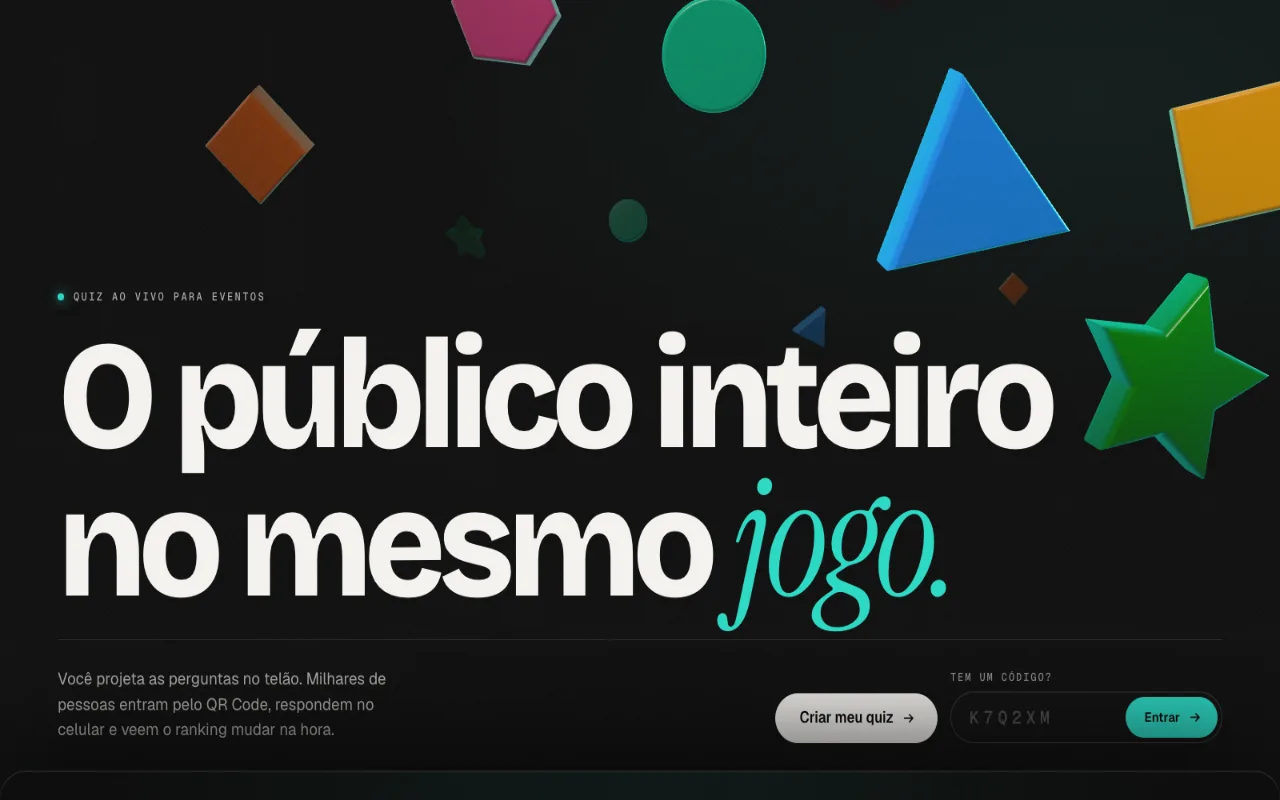
  • KaRoque home screen: the whole audience in the same game

    KaRoque

    7,471 of 7,500

    simulated players got in during the live load test (99.6%)

    A live quiz for events of 3 a 5 mil people: questions on the big screen, the audience answers on their phones and the ranking changes on the spot.

    All 67,980 answers in the sample were checked and counted, and the real-time database peaked at 32%.

    Open KaRoque
  • Agentolândia key art: a resident walking down a city street at dusk

    Agentolândia

    44 residents

    run by AI, with long memory

    An open city in the browser, where 44 AI residents remember, form ties, spread gossip and read the daily paper.

    They run on local models (Qwen, Gemma and DeepSeek) or the Anthropic API, and an attack suite proves that the model’s text cannot change the rules of the game. 931 commits since Oct 3, 2026.

    Open Agentolândia
  • Games

    23 games

    plus Agentolândia, in a single catalogue

    A catalogue of browser games, each in its own repository, built on jogo-sdk, an open SDK under the MIT license.

    The same kit, the same locks and the same rule of proof as the apps.

    See the games
  • RoqueOS in four and a half minutes

    109 shots

    271 takes and 7 automatic checks

    A retrospective of one year in the lab, which AI put together from a single request: it recorded the screens, cut to the beat of the music and checked its own video.

    The video opens through YouTube, without tracking cookies, only when you click.

    Music: Empty, by Roque Ribeiro

    Watch on YouTube

Checked on Nov 6, 2026: the KaRoque load test report, the Agentolândia repository history, the roqueos.com.br/jogos catalogue and the retrospective script.

level 14

I did not start from scratch

The cycle is the sum of public ideas, some of them decades old. What I did was assemble the version that runs, with locks, and publish what came out of it. It is a practical interpretation of AI-DLC: it is not AWS material or an AWS product.

Where I went further

  1. 01

    The cycle starts from what users say, not from someone’s request.

  2. 02

    Done only with proof, and the proof is demanded by an automatic lock.

  3. 03

    Each agent’s autonomy is written data, not a conversation.

  4. 04

    A single toolbox for every product, with more than one AI agent.

  5. 05

    A team of agents with written roles, where none of them checks its own work.

  6. 06

    The result is published, with dates, and the method is open, under the MIT license.

level 15

Glossary and questions

The words, without jargon

Agent
An AI program that carries out tasks on its own: reads, writes, tests, researches.
Multi-agent
Several agents with defined roles, passing the work to each other in writing.
Orchestrator
The agent that splits the work, hands each part to whoever knows how to do it and puts the result together.
Goal
A long task with its objective and finish criteria written down, which the agent pursues on its own until it is met.
Intent
The document that says which problem to solve, from which signal, and what stays out.
Spec
The blueprint: what must be true at the end, written so it can be checked.
Bolt
A short build step, a few hours long, with a start, an end and a test.
Gate
The checklist the machine runs before letting something through.
Evidence
The proof: the test results, the screenshot.
Hook
An automatic lock that fires at the right moment, such as when trying to finish without proof.
Scan
The automated test that looks for security flaws in code, in a system or in a network.
CVE
The public number of a known flaw in a piece of software, like a recall notice.
SAST and DAST
The test that reads the code at rest, and the test that attacks the running application.
FinOps
Treating cloud and AI cost as the responsibility of whoever builds, with data, an owner and a date.
Plugin
The package that carries rules, recipes and locks into any AI session.
Harness
The agent’s harness: the rules, locks and checklists that guide before and check after.
Local model
An AI model that runs on the computer itself, without sending data out.
SARIF
The standard format for scan reports, which tools and GitHub read the same way.
Skill
A recipe: the step by step of a task that repeats.
Diamond
The point in the cycle where a person approves.
Breaker
The switch that stops the agent at once, on the highest autonomy step.
Questions

Does AI replace the programmer?

Not here. It executes. The person decides what to build, approves every handoff and presses the final button.

How long does an app take?

The new apps took 2 to 8 days from first commit to the App Store, including Apple’s review.

Can I use the method?

You can. The open version is aidlc-harness, on GitHub, under the MIT license (level 11). And the sources for every idea are right below.

Does it work beyond phone apps?

It does. This site was built that way, in rounds with tests, screenshots checked by eye and shipping only on my word. So were a quiz for thousands of people and a city of agents (level 13).

Sources

Every outside number comes from a primary source, checked on Nov 6, 2026. When it is a vendor’s number, the page says so.

level 16

Follow the lab

The apps are on the stores, the method is open on GitHub and every new experiment shows up first on LinkedIn. To talk about AI in the development cycle, the email is right here.

I do not believe in slideware AI.I believe in the kind that runs.

The whole page, with the sources
levelhard.com.br/aidlc